The biggest mistakes on a first custom rigid box order are sizing the box to the product alone, picking a style that does not suit how the box is opened or shipped, and approving the mockup too fast. Custom Rigid Boxes Now catches most of these in the free 24-hour mockup, but only if your brief describes the full contents and how each box will travel.
- Free mockup within 24 hours to catch errors early
- Unlimited free revisions before you approve
- Pay nothing until you approve the design
- Minimum order of 12 makes a test run practical
- Standard turnaround about 2 weeks after approval
What are the most common mistakes on a first custom rigid box order?
The most common first-order mistakes with custom rigid boxes are measuring the wrong thing, picking a style before thinking about how the box will be opened and shipped, and approving a mockup too quickly. Custom Rigid Boxes Now sees the same handful of problems again and again, and almost all of them are decided on paper long before production starts.
A rigid box is built around your product. The greyboard is cut to size, wrapped in printed paper, and finished with foil, emboss, soft-touch or a magnet. Once that structure is made, nothing can be stretched, trimmed or re-wrapped, so a small error in the brief becomes a whole run of boxes that almost fit.
The good news is that each mistake below has a simple fix, and the free mockup within 24 hours gives you a checkpoint to catch most of them before you pay anything.
- Sizing the box to the product without the insert or wrapping
- Choosing a style that fights the way the box is used
- Treating the lid as the only branded surface
- Over-decorating until the logo gets lost
- Forgetting the shipping box around the rigid box
- Approving the mockup without checking it as a customer would
Why does a rigid box end up too tight or too loose?
A rigid box ends up too tight or too loose when the buyer sends the product size instead of the size of everything that has to go inside. Tissue, a card, a fabric pouch, a foam or paperboard insert and the product itself all take up room, and a rigid box has no flex to forgive a missing layer.
Loose boxes are the more common surprise. A product that slides around feels cheap the moment the lid comes off, and it can scuff the inside of the wrap in transit. Tight boxes are worse: a lid that has to be forced, a drawer that sticks, or a magnetic flap that will not close flat.
The fix is to describe the full contents, not just the hero item. Tell Custom Rigid Boxes Now what sits under, over and beside the product, and whether anything is added by hand after the boxes arrive. If you have the actual product, measure it in its own wrapping and mention any part that is soft or irregular. A custom rigid box with a fitted insert should hold the product still without pressure, so the insert is part of the sizing conversation from the start.
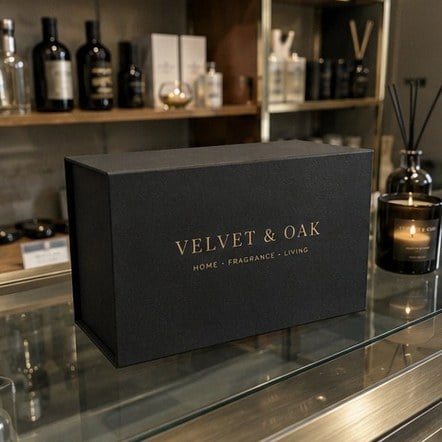
Which rigid box style is wrong for my product?
A rigid box style is wrong for your product when the opening motion fights how the box will actually be used. A beautiful book-style box makes a poor everyday mailer, and a two-piece box with a deep lid can be awkward for a product people open and close every day. Match the style to the moment, not only to the look.
| Style | Common mismatch | Better use |
|---|---|---|
| Magnetic-closure | Heavy products that strain the flap | Gifts, kits and launches opened once or twice |
| Two-piece | Products that need to stay closed in a bag | Display, retail and keepsakes |
| Drawer / slide | Tall or bulky items | Jewelry, cards and small sets |
| Book-style | Shipped bare without an outer carton | Presentation sets and storytelling packaging |
| Rigid mailer | Retail shelves where a lid reveal matters | DTC orders that ship as the box |
If you are unsure, describe the product, who opens it and whether it ships. Custom Rigid Boxes Now can suggest a style in the mockup stage, and because the minimum is 12, testing a style on a small run is realistic.
Is putting the logo only on the lid a mistake?
Putting the logo only on the lid is a missed opportunity rather than an error, but it is one of the most common regrets after a first rigid box order. The lid is seen once. The inside of the lid, the base, the insert and the sleeve are seen every time the box is opened, photographed or kept on a shelf.
Buyers often save the decoration budget for the top and leave every other surface plain. Then the unboxing photo shows a bare white interior, and the brand moment ends as soon as the lid lifts. A short line inside the lid, a pattern on the base wrap or a printed insert costs attention to design, not a complete rethink of the box.
When you brief Custom Rigid Boxes Now, list every surface you want decorated:
- Outer lid or flap
- Inside of the lid
- Base sides and bottom
- Insert top or card
- Sleeve or belly band, if used
The mockup shows each surface so you can decide where the message belongs before anything is printed.
Can too many finishes ruin a rigid box design?
Too many finishes can ruin a rigid box design, because foil, emboss, spot gloss and soft-touch all compete for the same few square inches. A first order often stacks every premium option at once, and the result reads as busy rather than luxurious. Restraint usually looks more expensive.
The pattern to avoid is foil on the logo, emboss on a pattern, gloss on a tagline and a metallic paper underneath, all on one lid. Each effect is good on its own. Together they fight, and fine lines in a small logo can fill in when several processes overlap.
A cleaner approach is to pick one hero finish and let the paper do the rest. A soft-touch wrap with a single foil logo, or a textured paper with a blind deboss, tends to photograph well and age well. Our guide to rigid box finishing covers how each effect behaves. If you want to compare options, ask Custom Rigid Boxes Now for mockup variations side by side; revisions are unlimited and free, so seeing two directions costs only a little time.
Why do rigid boxes arrive damaged when they ship to customers?
Rigid boxes arrive damaged when they ship to customers because a presentation box is not a shipping carton. Corners crush, wraps scuff and magnetic flaps get pushed open when a rigid box travels without an outer mailer or with too much empty space around it. Planning the ship-out is part of designing the box.
The mistake usually happens when a brand designs the box for a retail shelf or an in-person handoff, then later decides to ship it direct. A dark, matte, soft-touch wrap is gorgeous in hand and shows every scuff after a trip through a sorting facility.
Decide early how each box reaches the customer:
- Handed over in person or at an event
- Placed on a retail shelf
- Shipped inside an outer carton
- Shipped as the box itself
For the last case, a rigid mailer box is built to travel. For the others, tell Custom Rigid Boxes Now what outer packaging you plan to use so the box size works with it.
What should I check before approving a rigid box mockup?
Before approving a rigid box mockup, check it the way a customer will experience it: from closed, to open, to empty. Most first-order regrets come from a mockup approved in a hurry by someone looking only at the lid. Custom Rigid Boxes Now sends the free mockup within 24 hours, so there is time to review it properly.
- Spelling of every word, including small print inside the lid
- Logo version, color and placement on each surface
- Which elements are foil, emboss or deboss
- Box style and opening direction
- Insert layout and how the product sits
- Wrap paper color and texture
- Quantity, and any variations within the run
- Delivery address and in-hand date
Ask the person who signs off on brand decisions to review the mockup too, not only the person placing the order. Revisions are unlimited and free, and you pay nothing until you approve the design. Once approved, standard production takes about 2 weeks, so a careful review is far cheaper than a reprint.
How do I avoid ordering the wrong quantity of rigid boxes?
Avoid ordering the wrong quantity of rigid boxes by counting the boxes you will hand out and then adding a small number of spares for damage, photography and late additions. First orders often forget that a few boxes go to the product shoot, a few get bent while packing, and a few are needed for people added at the last minute.
The opposite mistake is ordering far more than a launch needs because the design feels final. Brands often refine the box after seeing it in customers’ hands, and a large first run locks in the first version. With a minimum of 12, Custom Rigid Boxes Now makes a smaller early run practical, and you can reorder the same design later.
Our post on how many custom rigid boxes to order walks through the full count. The short version: count real recipients, add spares, and stage a reorder rather than guessing a huge number up front.
How can a first-time buyer avoid all of these mistakes?
A first-time buyer avoids these rigid box mistakes by sending a complete brief, using the mockup as a real checkpoint and deciding the ship-out plan before production. Those three habits cover sizing, style, decoration and damage in one pass.
A complete brief includes the product and everything packed with it, how the box is opened and delivered, which surfaces carry branding, the finish you most want, the quantity and the in-hand date. Send it through the quote form, and Custom Rigid Boxes Now returns a free mockup within 24 hours. The how it works page shows each stage from request to delivery.
Planning a box for an event? Our page on custom rigid boxes for weddings shows how favor, proposal and thank-you boxes come together in one order.
Frequently asked questions
Should I send the actual product before ordering custom rigid boxes?
Rigid boxes are sized most accurately when the maker understands the real product, its wrapping and anything packed beside it. Sending exact measurements and clear notes is usually enough for Custom Rigid Boxes Now to build a fitted mockup. If the product is soft, irregular or still changing shape, mention that in the brief so the insert can be planned around how the final version will actually sit.
What happens if my product design changes after I approve a rigid box?
A rigid box approved for one product version may not fit a revised version, because greyboard and inserts are cut to size. Tell the team as soon as the product changes, ideally before production begins. If boxes are already made, a new insert or a new run may be the cleanest fix, which is why locking product dimensions before approval saves time.
Can a rigid box look different on screen than in hand?
Rigid box colors, papers and finishes can look slightly different in person than on a screen, since monitors vary and textures like soft-touch or linen do not fully show in a digital file. Custom Rigid Boxes Now describes the paper and finish in the mockup notes. If an exact match matters, share a Pantone reference so the wrap is printed against a fixed color standard.
Is a white rigid box interior a mistake for a premium brand?
A white rigid box interior is not a mistake, but a plain interior can feel unfinished once the lid comes off. Many brands add a printed inside lid, a colored base wrap or a branded insert so the reveal carries the brand. Even a single line of text or a simple pattern inside makes the unboxing feel considered rather than empty.
How do I keep a magnetic rigid box from popping open in transit?
Magnetic rigid boxes stay closed in transit when the contents fit snugly and the box ships inside an outer carton with little empty space. Overfilled boxes push the flap open, and loose boxes rattle until the magnet lets go. Tell Custom Rigid Boxes Now the full contents and how you ship, so the box depth and insert keep the flap sitting flat.
Can I fix a typo on rigid boxes after production?
Rigid boxes with a printed typo usually cannot be corrected after production, because the text is printed on the wrap paper before it is glued around the board. A sticker or sleeve can hide small errors, but it rarely looks premium. Reading every word on the mockup, including small print inside the lid, is the reliable way to prevent it.
Do dark rigid box wraps show scratches more easily?
Dark rigid box wraps, especially matte black and deep navy, tend to show scuffs and fingerprints more than lighter or textured papers. They still look striking in hand and on camera. If the boxes will ship or be handled often, ask Custom Rigid Boxes Now about textured papers or finishes that resist marks, and plan an outer carton for shipping.
Why does my rigid box logo look thinner after foil stamping?
Rigid box logos can look thinner after foil stamping when very fine lines or tiny text sit below what the foil die can reproduce cleanly. Bold, simple marks hold foil best. If your logo has delicate details, a slightly heavier version for the box, or a different finish such as printing or deboss, keeps it crisp and readable.
Should one person or a team approve a rigid box order?
Rigid box orders go most smoothly when one person owns the approval but a brand or product lead reviews the mockup before sign-off. Too many approvers slow decisions, while a single unchecked approval invites missed errors. Custom Rigid Boxes Now offers unlimited free revisions, so gathering the right feedback before saying yes costs time rather than money.
Can I order rigid boxes before my insert design is final?
Rigid boxes and their inserts are usually designed together, because the insert controls how the product sits and how deep the box needs to be. Starting the mockup early is fine, but production should wait until the insert layout is confirmed. Approving the box without the insert risks a run that looks right and fits poorly.
Is it a mistake to choose the cheapest paper for a rigid box?
Rigid box paper choice affects how the box feels, how colors print and how well it resists scuffs, so picking only by cost can undercut the premium effect. A simpler style with a better wrap often looks more luxurious than an elaborate box in thin paper. Ask Custom Rigid Boxes Now what drives the price, then spend on the surface customers touch first.
Get a free mockup for your rigid boxes now
Send your logo or idea and the quantity you have in mind. Custom Rigid Boxes Now returns a free mockup within 24 hours, you approve the design before anything is produced, and standard turnaround is about two weeks with faster options available. Get a custom quote.